Showing posts with label epiphanies. Show all posts

Thursday, August 20, 2009

Re-evaluation time


You know the drill. Sometimes you dismiss an artist/singer as "not your cup of tea" for many years.

Curiously, you reinvestigate and suddenly, BAM, you totally get what they're trying to do. And you can't remember why exactly you didn't like so-and-so, even when you go back to what you had previously experienced when making your first evaluation.

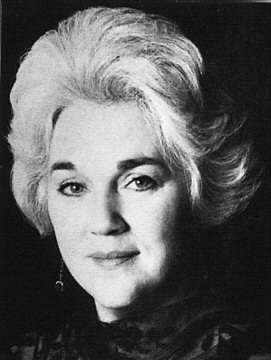
That's happened big-time for me with Eleanor Steber and to a lesser extent Hildegard Behrens.

As you may know, Hildegard Behrens recently passed away in Japan. Obits and retrospectives and starting to sprout, and in the manner of hagiography, more people are speaking of her refulgent and glorious voice than I think were willing to do so while she was still alive (but not actively performing).

The best description I've read of her as an artist is "a true artist adroitly handling an indifferent voice" (JJ of parterre [I believe] when comparing Behrens to a singer who indifferently handled a marvelous voice). The minor revelation came when Nick Scholl posted clips of Behrens in a 1994 outing of Elektra at the Met.

For considerable stretches of the singing, there is a new body to the sound that I hadn't associated with her voice (certainly not present in the singing of the Farberin for Solti) which I always had thought rather washed out pastel in tone color. Slightly whiny and weak-sounding, even though the voice by all accounts had impressive thrust and cut.

These Elektra clips show a more balanced voice -- an upper register that, for the most part, feels anchored in one place rather than the unstable, moorless sound I first associated with her.

Here is an impressive Isolde from Behrens (comparatively early in '81 with Bernstein conducting). The connection is in place. It's certainly more consistent than even in the Elektra.

Weh, ganz allein!


This is in marked contrast with her Kaiserin (it's more dramatic in comparison to her Farberin, but that isn't on the interwebbbbssss)


(Also, why does lesbian sex come up when I do a google video search for "hildegard behrens mozart"?)

Speaking of this very "aria" -- this is the very aria that caused me to re-evaluate Eleanor Steber. I had listened early on to a couple clips -- I think the Ballatella from Pagliacci, a Spectre de la rose (which I thought very bruising after Crespin's, which might be an unfair comparison, since it irrevocably redefined modern conceptions of the piece away from what Maggie Teyte held), but it certainly wasn't this stunning Come scoglio (English) (bonus picture in the last couple minutes of young Steber looking like Renee Fleming).

Steber was famously always fighting what she thought was Met's management underutilization of her. Terribly undiplomatic is how I think people would put it if they were kind. In any event, she arranged a Carnegie Hall recital in which she trotted out an INSANE lineup. The Kaiserin's first act Aria, her Third Act monologue, Qui la voce from Puritani, and a whole crapton of others.

Listening to the below, it brings everything back to focus. I get her singing now.

Ist mein Liebster dahin?


Pace pace


(She has some freaky eye movements though, which makes me think she might have been kind of unbelievable whilst acting. No such worries about Behrens (and OMG, Crespin's performance demeanor is stunning. You can't take your eyes off her) -- while for me, she crosses over a bit into over-the-top flaily flail that Dessay does a lot (and I like not so much in her case either), I haven't ever seen her "singing" even when the camera is shoved in her face. Steber definitely is singing, however well, in the closeups of the Ballatella.)


Monday, June 2, 2008

ahoy!


It's been awhile since I've had both the time and inclination to write -- what a semester! But the next series of posts should hopefully bring everything back into relief.

I had started writing this blog to chronicle the sorts of things I encountered in switching into vocal performance. At the outset, I had consciously thought of the possibility of what to do once I did get into school and started attending. Looking back, I don't remember what I felt about my chances of actually getting into places that I applied. Of course I had my dreams, but that's not exactly something that's very rational.

In the same vein of preparing notes and keeping track of progress while applying (and getting ready for auditions), I had imagined my blogging activity would be a benchmark for my progress, development, and breakthroughs while attending school. I've been kind of remiss in keeping track of that, so hopefully this post will also be the beginning of a return to this approach (rather than simply the sharing of awesome found things on the internets..though that won't disappear. You're welcome or sorry depending on your stance).

Breakthroughs:

This first one is a two-parter. I've always had trouble with the [i] vowel -- all sorts of tightness and tension. The first breakthrough came when one of John's former students was in town on a production and came by to say hi. It just so happened that I was performing in the voice department recital and had a lesson afterwards. Ryan asked if I minded if he sat in on my lesson and helped with tongue-placement for the [i] vowel. Namely, making sure the tip of the tongue stays forward (almost even moving it forward to counteract the tendency to pull back on it) in order to encourage the base of the tongue to not clog the throat. Breakthrough 1. The next one came when I was doing exercises with my summer teacher, Ruth, just recently. The other component of stress came from the soft palate collapsing down as the back of the tongue comes up to form the vowel in some sort of sympathetic motion. Once I noticed this was happening, I could think about separating the two parts of my body to do different things at the same time. It's not perfect yet (obviously) but it's a much better, looser sound. The third breakthrough will happen when I can finally embrace the fact that the sound will just have to carry. It'll never be a "beefy" sound on [i].


Truth be told, the big sort of breakthrough of this semester has been developing a finer control of the soft palate so it doesn't just collapse all the time or jerk up or whatnot. This combined with a better connective, deeper support of last semester has smoothed my singing out immensely. Breakthroughs still in the wings include figuring out how "really" to sing up through the passaggio and into the high notes that I'm pretty sure I'll have one day. But they're just tantalizingly (annoyingly) out of reach at the moment. Bah!

Books Read:
Sort of filling out my other obsession, I picked up Julie & Julia in anticipation of waiting around in doctors' offices.

It's a fairly decent read, though the hyperbolic comparison of living in NYC to being in a Khmer Rouge camp (and similar comparisons of her middle-class life to truly desperate conditions) I find in pretty bad taste.

I also picked up volume of Joseph Kerman's criticism written for the New York Review of Books, which I am adoring, despite his polemics in Opera as Drama. I find his reviews to be much more balanced. Though maybe it's just that I've grown up a bit, read a bit more. I'll have to revisit Opera as Drama and see what I think.

And as a lagniappe, I've (re?)discovered Brigitte Fassbaender! I don't know why I always had it in my head that it was a brusque, uneven voice.

Check out these youtubes for some awesome:

Suicidio


Una voce poco fa

Tuesday, March 18, 2008

hiding out


the dearth of posts here at CB recently are possibly attributable to class nuttiness leading up to spring break (on which we are currently! hiding out in the desert). More likely, it's a combination of that, the drain on energy that a more-than-full course load + 25 hour work week crammed into a weekend, uncertainty of what happens next, and possibly general seasonal affective poopery.

However, there are some bright discoveries -- chief among them the delicious produce at H-Mart in nearby Catonsville.


Oh, and my clear desire to one day raise pet/laying chickens/turkeys/ducks. Mmmm! There's something about little clucking birds that are extremely cheering. Obviously, that's probably not going to happen in the middle of downtown Baltimore. But someday...in the distance.


As far as school goes, things are going well. Really, well as can be expected. As a friend is fond of reminding me: "If you're going to overload yourself like that, at least be kind enough to your psyche to forgive it when it can't deliver the top quality that you're used to." As far as vocal instruction goes, I'm working diligently, but I could be working a bit harder. Which I imagine is a pretty good place to be. At least I'm not burning out on it.

Kind of the opposite, it's developing really quite well -- it's just a totally odd feeling sitting here with my still-forming technique and not really able to articulate, even to myself, mentally, why X isn't working. It's easy to see that X isn't working...but the functional reason? Well, I suppose that's why I have a teacher, eh?

And speaking of teacher, not for the last time, I am reminded that the strides I've made this year would not have been possible without this particular student/teacher setup. He's so generous with his energy and his time, it's almost embarrassing to be the beneficiary. And it's a nice incentive to make the most of it. Because, you know, who knows when he will retire.

But anyway, as the first year at Peabody draws to a close, I do have some questions weighing on my mind, and I'm not entirely sure what would/could answer them. But they are nagging all the same, and there's kind of no room for that right now. I've got my first "unveiling" at a voice department recital that I need to pull together and polish. This in this last week.

But what sort of post would this be without some youtube?


Saturday, February 16, 2008

two thoughts


briefly, because a dinner of empanadas awaits me and I shan't keep them lonely:

1) I had a great conversation with someone (sparked by a good night at the opera) about art not as objects, but rather the relationship between that object its context. This was doubly interesting since I seem to be having a series of such revelations about things, particularly voices and performances. Voices that I hadn't particular feelings about have become instead, very appreciated. And it has to do with context, both within the setting of the voice and my own positionality. It's interesting to think of voice not as some object that is put together, like flowers on a table in a setting or in a vase -- but rather, as a painting thereof because you can't extract it from its setting that way, despite its recognizability (well, sometimes).

2) Earlier in the week I also went to a Handel lecture given by Ellen Harris, whom you may remember from a previous post. She talked about the intersection of the profane and sacred music of Handel's italian output, though it seemed more centered on certain observations about treatments of floridity in these works. Central to her examples is the oratorio "Il Trionfo del tempo e del disinganno" in which Beauty (Bellezza) must choose between Piacere (Pleasure) and Time and Good Counsel (Tempo e Disinganno). In this work, Harris argues, floridity and virtuosity is used to depict something alluring yet dangerous, and because of the librettists insertion of Handel into the scenario in Piacere's palace, a specific kind of virtuosity is employed.

In any case, the work ends with this scene sung by Bellezza. Isabel Rey (who sounds better than last I encountered her, though even in that setting, she sounded better with repeated hearings) and accompanied by Marc Minkowski, whose babies I want to bear.


Friday, December 21, 2007


on wednesday, i had my last final. it was a singing/performance final for english diction, which must have been nervewracking for the two students who weren't voice majors. i can only imagine -- and they acquitted themselves just fine.

however, one of my classmates just got out and knocked out a song by Richard Hageman, Do Not Go My Love. It was the first time I heard her sing and it was such an amazing fit, vocally, temperamentally that I couldn't help but start crying.

at least it was a more or less "pretty cry."

i think it really hits home the point of singing things that you do really well, because it's just so much less effective if you sing something with more of a "name" or "cachet" and leave much to be desired.

in any event, finals are over and it's just work this weekend, packing, and then getting on a plane home, where I'll eat, dig up some music, learn german, eat, sleep, and eat. delicious!


Wednesday, December 12, 2007

life changes


so in addition to moving house, i recently attended a [stunning] masterclass given by Leon Fleisher.

I didn't really know what to expect -- I'm not even sure if I expected anything other than to hear people play and to hear Leon Fleisher give whatever advice he could.

It's consistently amazing what happens when people become so intimately knowledgeable (particularly on the teaching end) in different fields. The best, I think, develop some sort of underlying architectural sense for what is not quite meshing, which often have tectonic and far-reaching effects -- and other times, involve miniscule detailing but finish off a product in such a way so as to be essential, detail or no.

Fleisher was incredible at fixing things that are apparent at a listener's level but are rarely fixable from that direction. Instead, the changes need to be approached (according to Cornelius Reid) functionally. Why is this phrase drooping? If it is something that a music lover can hear and identify, that doesn't mean said music lover is necessarily able to fix it just by pointing out the symptom.

It was pretty great to watch. Also, got an interpretive idea that I'm now mildly obsessed with applying to a particular piece I'm working on. Mmm. May share if anything comes of it.

ok, now must get ready for choir concert. boo.

Friday, November 30, 2007

i'm alive

or at least I think I am. This has been a nutty nutty week, but I shall spare you the details.

The big picture is that I have moved into a gorgeous (4th floor) apartment with a good friend of mine from school. It's beautiful. Ok, and gorgeous, but you knew that. It looks transfigured after the clean-up job the management company did after we took our first look.

It seems like it's a smaller management company, so you get some of the personality of individuals, but with a more business-appropriate standardization (none of the, say, crazy landlords that try to steal your security deposit). In the case of our apartment, the choices came down to the floor tile used in the bathroom, the carpet throughout the apartment, and the wall/ceiling colors.

They're all very neutral and picked to be appealing to most everyone, but they are not drab. The carpet is a muted caramel color and is padded exceedingly well so it's very soft. The walls are painted a diffuse off-white color that picks up the color of the carpet, really unifying the space. The kitchen/bathroom tiles are similarly well-chosen.

In any event, it's also been a trying time because it is end of term in addition to the financial squeeze and time crunch of moving. But, that is over. It was definitely an exercise in trying to put aside the frustrations of things not working and instead focusing on a) what is working and maintaining it and b) what is the first source of what isn't working (rather than just symptoms).

I just put my finger on the source of vocal trouble, at least -- the time crunch has eaten into the time that I've been putting into really developing vocally and keeping the gears all oiled and lined up (such as they can be in this technique-building stage). The fact that I haven't been able to do that (or rather, chose not to with the limited time that I had) meant that I, instead, had to focus on how to make specific performances work.

Note to self: always make time for the basics!

Wednesday, November 21, 2007

to make do


sometimes we must make do with what we have. and sometimes we realize we have more that's valuable than anybody would have guessed, even ourselves.

I sense that a little bit with Ms. Cathy Berberian, a particular hero of mine if you're late to the party :)


Sunday, November 18, 2007

thought


I feel I have been making great progress on fundamental technical issues so far this semester, and while working hard has been a big part of a it, just as important, I think, has been the approach that my teachers has taken with me.


It reminds me of what I read once about Jan DeGaetani's teaching style. One of her former pupils was being interviewed about his own teaching (he was being awarded something for his teaching excellence) and he spoke about DeGaetani's approach. He recalled that sitting in on her lessons, he realized that although she saw all the things that needed to be fixed, she didn't address them head on. Instead, her approach was roundabout, by "the back door" (his words, not mine!), seemingly unconnected to the problem at hand. But lo! the problem would be addressed just as surely as if it had been mentioned explicitly.


Saturday, November 10, 2007

god i am an idiot


i think i just realized i'm thinking about this absolutely wrong, right down to my previous analogies about singing = balancing objects, at least in the way i had been visualizing it, especially with regard to breath support.

see, I had always thought of it kind of like one's breathing system being one long hollow pipe. and efficiency of breath was done by just "putting less" breath through the pipe.

I see now that this approach most closely correlates to a funnel balancing on a desk by it's narrow tip. It's not moving, but any sort of poke and WHOOP it's going to come crashing down.

Instead of less exhalation, I should have thought more inhalation.

Let me put it this way, if one is doing work that must be done gradually, like putting a really heavy object down, one exerts a lot of effort to first bring the object to equilibrium with gravity, i.e., to suspend it in air.

Then you gradually decrease your energy until the object is on the ground.

I just realized that this is what I learned to do with my breath support (which allowed an increase in volume). Instead of trying to relax my support muscles, I should engage them and engage, in addition, their opposing muscles! Short story: it's easier to fine-tune energy already being spent rather than try and engage energy from no expenditure in a controlled way.

This might yield insights into other things now. maybe.

or this might make absolutely no sense in the morning.

Friday, November 9, 2007

tickle the nose


GAH! In an effort to get me to utilize nasal resonance areas, my teacher has asked me to do series of exercises based upon and around singing "ning" with full closure to the mouth.

just today, we were warming up with various patterns using "ning" when he said that your nose should be buzzing off the wall and it should nearly hurt!

hm. so I'm trying to work with that as a guide to my search, because heretofore, I have felt nary a tickle in my nose until now when the front of my nose was going "holy god, scratch me because I am itchy with these vibrations.

may this serve as a note to self. now to continue.

Wednesday, November 7, 2007

diva, or velour?


I just came home from attending a concert given by a collaborative pianist of mine. Given that this week has been revolving around some bizarre little theme, it only now struck me what that theme might be.

During the Monday masterclass, Roger Vignoles often asked the accompanists to stand as he took his turn at the piano to demonstrate a point or another. Aside from recalling what Leon Fleisher had to say about how focal dystonia (and the resulting inability to play as demonstration) affected his teaching, it also was the seed for my current thoughts on how to balance volumes and what forte and piano mean, practically.

Hearing Vignoles accompany, I was struck by how strongly voiced the lines he wanted to highlight were. If one paid attention, they were played at a considerable dynamic. However, every other texture was made to be incredibly transparent and light, almost as if in compensation.

Except it's not in compensation for anything. One wants to hear what is important, and one wants to hear it clearly. This is the reason why beautifully articulated scales at a slower absolute tempo sound "faster" than slurred scales at a faster absolute tempo. It's because without clarity, sound becomes just that, disorganized sound. So a low rumble is more distracting than a clear melody with very light accompaniment texture.

Which reminded me eeeerily of a piano masterclass I had with Jose Feghali when I was a wee lad. As he put it (and as I remember it, which might be totally apocryphal at this distance), there is very little between a melodic p and melodic f when playing in a hall. The dynamic contrast comes from the volume of everything else and the texture. (A muddy texture will always sound louder than a transparent one.)

So the diva route could perhaps be to think "well, damn -- volume isn't my problem; it's all under the pianists control! play softer!" but I think that also misses the point about texture. A voix mixte production of similar volume to a tone that has more "core" will sound softer. And in a way it is. The texture is softer. chinchilla vs. cotton!

But another thing that both Feghali and Vignoles seemed to be getting at, at least indirectly, and what my experiences have been listening to student singers (and why I'm graaateful to be studying with whom I'm studying) is that they've been seeking clarity of meaning, which goes hand in hand with a clarity of text.

Vignoles wanted more clarity of line from both the accompanists and vocalists -- less so on the diction. But I also found that to be sometimes in need of some help. This bit of writing from the marvelous Ira Siff published in Opera News comes to mind:

Another benefit of Doria's [forward] placement is abundantly clear diction. This is a most attractive component of her performances of French song. The two-CD set Melodies Francaises (Malibran-Music CDRG 101) offers an artist who approaches this genre without artifice, bent on pure communication of the text. Doria began her career as a recitalist and maintained an interest in song literature into her seventies, when she made her final recordings. The keys chosen for the fifty-nine songs, recorded (with one exception) in 1953, do not give Doria's high instrument the consistent opportunity to make certain vocal effects that we have come to associate with this idiom -- floated pianissimos in particular. Such a tessitura would have impeded clarity of diction. Instead, we discover an interpreter never tempted by preciousness, who delivers the poetry with an emphasis at least equal to the one she affords the melody, capable of ravishing effects, incapable of affectation.


So my driving search is for clarity. For now and into the future.

sidenote: I'm pissed that I totally missed out on a Meredith Monk seminar that was little, if at all, advertised. GAH! But bonus stuff re Leon Fleisher!


Youtube snippet of behind-the-scenes filming of the documentary Two Hands:


An interview with Leon Fleisher when he visited the Twin Cities of St. Paul and Minneapolis, followed by a performance of Bach's And Sheep May Safely Graze arranged by Egon Petri.


Friday, October 26, 2007

pendulum? or stick-balancing?


I've been having very good lessons so far. Good in the sense that they feel hard -- I feel like I'm being worked during them and they leave me frustrated. In a good way; frustrated that I'm not singing better because I know it is within my grasp (as opposed to the bad way where it feels frustrating because it seems I'll never get it/understand). So it's a good situation.

And it's interesting to think about how progress is never a straight line forward. It's usual hugger-mugger wavering around equilibrium. Sometimes you overshoot, sometimes you undershoot, hence the pendulum or stick-balancing (like taking a can and balancing it on point in the palm of your hand) thought. It occurred to me how little goes a long way. At the moment, I'm needing to clean up my diction, but I've been doing it a little bit too much and it sounds too chewed up and caricatured. Not to mention destroying the musical line.

So it's a question of important things being there, but not so being there that they're overwhelming. In a lot of ways, it reminds me of piano playing and bringing out voices. It's almost that you just have to listen for them and voila, they appear. If you try too much more than that, then it sounds forced.

Dios mio, I'll get this yet!

Friday, October 19, 2007

double-header part 1

As I have a long night ahead of me, a bunch of bumpy thoughts will come rocketing out, most likely in two parts.

First and foremost, there has been significant strides in the voice. Generally speaking, it feels like it's more solid, particularly in the upper reaches, which is a nice change of place. Cracks now are more clearly linked with their causes as opposed to generally unexplained fractures. It'll take time before actual confidence comes, and of course there is a lot of smoothing to be done, but generally what really came together was the sensation of resistance in the breath and sound.

It's weird, and the best analogy I can come up with a string one. When I started playing violin as a wee beteen, I was always drawn to utmost intensity. I developed a whole heck of tension in odd places trying to wring as much sound (and as dramatic a sound) as possible. Apparently, this intense sound is not how most wee violinists begin making violin noises, so by the time I got to me last (and most important/influential) teacher - of anything, really - most of our work was in scaling this tenseness and intensity back so I could play with a fuller range of colors and radiance.

Compare the sounds that Nathan Milstein (whose tone my teacher compared mine too - I have no idea if she was serious) makes in two different Bach solo compositions.


E major Gigue:


Chaconne:


If you watched them in this order, it might strike you how different the opening sounds are. The Gigue is played with flowing strokes, lots of bow. The Chaconne opens with much more intense sound, and you can almost imagine the feeling of Milstein's bow pulling the sound out from his violin (and the sound somewhat resisting), giving it that plangency and solidity.

But then if you go back to the Gigue, you can hear that pull there still!

So the best description I can give to what it is that I am on the track to figuring out is that I think I know how to get that pulled sound. I can feel a sensation in my singing of my pulling out the sound from my body (it doesn't feel like the cords, per se), which seems to have 1) focused the sound and 2) given me a lot more air capacity, in that I need less air to make the noises I was making (particularly up high). Perhaps as a reaction to how my progress in violin-learning, I think I was absolutely hesitant to introduce any kind of similar tensions (or juxtaposition of forces, shall we say, as "tension" is generally short for "bad tension" in vocal pedagogy). Before trying to sing this way, it felt like I was just pouring out air like buckets of water. Which of course would use up the air really quickly and not send it very far either.

I sang this way for my teacher yesterday, and immediately he brightened up and encouraged me to sing out even more (apparently, and my mother picked up on this when I was home this past weekend (which might have to be taken up in part 2, later)). It seems that I am psychologically worried about singing too loudly, or openly, or what - but I'm definitely not just letting the sound out enough. (I might have to bond more with my devil-may-care id which has had to channel its energy into other activities since I have been barring it from music-making, it seems).

Anyhow, some more lovely violin playing!


Edit: As a sidenote, there's this one kind of cookie that catering does in the kitchen at work that always taste/smells ever-so-faintly like cooked chicken liver (which is a flavor I happen to like...just not in a cookie).

Sunday, October 14, 2007

stones of different sorts

Am visiting home briefly during break:

1) milestone - 100 posts

2) grindstone - sing sing sing! (but we're getting somewhere! not sure if I'm doing it correctly, but I think I'm using my air much more economically-- *and* to some extent am mixing registers. woo!)

3) flintstone (ok I got nothing - but apropos of the Charlie Rose interview with Natalie Dessay, there's an interview excerpt from a posted interview with Joel Kaskow (who runs culturekiosque, which I began reading a looong time ago) which might throw some context on why/what Dessay says the things she says about acting, the theater, and opera. To wit:

Operanet: I read that you consider acting almost more important than singing...

ND: It is more important. For me, singing and music are only a means of expression, the goal being a theatrical and emotional experience.

Operanet: Would you say, for example, that it is 60% acting and 40% music?

ND: No, for me it would be 70% theater and 30% music and voice, which is not to say that it is unimportant, because you must have that 30%. You can't say, "I act and I don't care if I don't sing well." You must sing well and make music, be a musician. But that's only 30% of the singer's work, even if that 30% is primordial.

Operanet: When I saw you in the role of Ophélie in Hamlet (by Ambroise Thomas) in Geneva, I wrote that you sang in just about any position other than one comfortable for singing.

ND: Definitely, because if you want to sing without moving around, all you have to do is give concerts.


Full interview here: (free registration required) Interview with Dessay

4) whetstone - Imma possibly moving apartments (yay, roommmmaaaate) and as such will be bringing back such delightful things as a hippie cooker (pet name for slow cooking device that is energy efficient, not an implement to cook laid-back, peace-loving people) and a set of dinnerware.

Ok, I think I'm tapped out for now. Until more things come up!

Sunday, October 7, 2007

weekend hodgepodge

semi-related thoughts:

  • ergonomic typing posture seems to be a lot like well-observed singing technique: for most people, it just doesn't matter, but if you're going to be typing full-tilt for an extended amount of consecutive time, you better pull your body posture in alignment and float your wrists like a larynx if you don't want to be super achy. you *can* get away with lousy posture, etc., but that's how you get carpal tunnel.

  • i'm really starting to feel settled into school, more or less. the full implications of what my teacher said to me ("peabody is gambling on you; you are gambling on peabody; you are gambling on me when you decided to study with me; and i am gambling on you, teaching you. nobody knows how things will turn out, we just work hard and hope for the best.") finally caught up. oddly enough, it was the positive implications that became clearer (oh, the possible ways of things running off the track are well on my mind, thank you), i.e., that peabody and my teacher are gambling yes, but they wouldn't be doing it if they didn't think it were a smart/good investment. obviously, it doesn't guarantee anything, but I can stop feeling oddly out of place at lessons and realize that everyone here is interested in my doing well.

  • divine as inspiration for disney's ursula. discuss.

  • Schumann


  • Janine Jansen seems like a very articulate person. Of course she's pretty, but a lot of it has to do with how the camera sees her and her makeup/wardrobe. Not that I think it's an illusion, but imagining that people are this pretty without effort just doesn't fly.
    gah! embedding isn't working - web-foo too weak...weh weh


mmm sleepies.

Saturday, September 22, 2007

the constructed narrative

so I've already geeked out about Bruno Latour on these pages, but now I get to add another European philosopher of science/knowledge, the polish Ludwik Fleck. His book, Genealogy and Development of A Scientific fact is absolutely changing my life.


Whereas Bruno Latour is talking about the controversies encountered in the development of scientific fact, Fleck talks about the study of and phenomenology of what a scientific fact is. I haven't finished the book, and I'm not entirely sure that I'll be able to parse out the exact philosophical implications of all of this just yet, but the interesting contention that like any other non-scientific "fact," scientific facts are no more ur-real. Social nets condition and determine not only how facts are developed (it's pretty clear from studies done on expectation bias, etc.), but the facts themselves, Fleck argues, are themselves part of the net of intersection social conditions. To illustrate his point, Fleck looks at the genealogy of scientific facts surrounding syphilis and in particular, a genealogy of the Wasserman reaction which is used to diagnose syphilis.

I had trouble visualizing it until recently when I was in the shower. You know those little graph illustrations of curved space that always pop up when talking about Einstein and relativity?


As an analogue, think of societal knowledge or through structure as what represents gravity and curves the space, what Fleck calls "active" knowledge. Next, consider each line as a particular line of thought, with intersections as scientific facts. This, Fleck calls "passive" knowledge (in that it follows the traditional idea of 'reality' as some objective existence that can be known definitively).

So, a traditional view of science and scientific inquiry would tend to view the process as: logical inquiry (lines) being distorted by bias (gravity). Thus, unbiased (or least-biased) inquiry is possible, so the driving goal is to remove bias.

As I understand it, Fleck argues that no, this "distortion" actually is no such thing. That's just how the terrain *is* based on the prevailing thought style (as he calls him) and logical inquiry must needs fit to this terrain. The byproduct of this is that there *is* no objective truth because for this to be true, there must be cognition without a society or societal knowledge, which Fleck expressly and specifically describes as impossible.

It's taking a bit of time and energy to wrap my head around these thoughts and to visualize it -- but it's definitely changing my life, particularly with lots of collisions of secondary (tertiary or even more +ary levels) thought-styles that occurs with places of "artificial" diversity (e.g., Washington, D.C., most post-high school settings).

Anywhere, where the hell was I talking about? OH OH, the reason why this plays into music study (and life and general)? There's an interesting phenomenon that accompanies thought styles, and that is the general suppression of extraneous or contradictory information. It's certainly apparent in scientific inquiry and experimentation ("we went looking for a vaccine," "after this experiment, it was clear we needed to do X so we performed Y experiment) which almost never holds up when the process is more clearly examined and parsed (Fleck observes wrly that well-defined experiments cannot lead to cognition since well-defined experiments require the outcome to be known!). In retrospect, then, what was a kinky line of haphazard direction is straightened out into a direct A to B line. And what's interesting is that this isn't done on some sort of Cartesian plane:


But instead, this twisty turny thing, is *called* straight and the thought style bends to conform to it, assimilate it. Thus, the shortest (logical) distance between fact A and fact B is no longer a "straight line" in the sense that it conforms, instead, to the bendy twisty reality of the thought style. That's the thunder of Fleck's argument.

It's so easy to see this in terms of narratives for how people have learned to sing, which is why it's refreshing to hear people talk of how it wasn't A to B and then B to C in their learning. Renee Fleming comes to mind. Vivica Genaux is another (whose metaphor of groping around in the dark to find the door I found particularly apt).

And, my teacher also shared with me other stories in which he spent a great deal of time learning to do things that he's asking me to learn. Which helps, so I don't feel quite like a fuck up for not getting it immediately (that's a really bad personality tick that I'm trying to kick). So, it's back to humming.

Hm! Hm! Hm! Hm hm hm hm hm! Hm hm hm hm HM!

Friday, September 21, 2007

it's a teeny world

I just returned from the dress rehearsal of Washington Concert Opera's performance of I puritani. On paper, it looked pretty promising:

Arturo: Larry Brownlee
Elvira: Sarah Coburn
some other people
Giorgio: David Pittsinger

I had heard from my previous voice teacher that Larry Brownlee was something special. And he was! I mean, aside from the awards that he's got, it's definitely a beautiful, round voice that's centered quite high. (In the dress, he went for the high F and got it, though it wasn't without its dangers.) It did get lost among the orchestra's thickness, though and one misses a bit of point and ping in the sound, but I think the larger issue was a lack of orchestral transparency, which I gather is unusual under Maestro Antony Walker, but whatever. We call it like we hears it.

Sarah Coburn is an interesting voice. I think she's overparted as Elvira. It's so relentlessly high. And while she can have beautifully emitted high notes (from say, A to E-flat), unless she can prepare for them, they come out screechy. She has to resort to blowsy open-throated attacks to carry through the orchestra and generally seemed to be riding the "I'm gonna blow out my vocal chords" wave pretty hard. When you have to breathe every measure and a half, something's going on (or not, as the case may be).

It was certainly interesting to hear the opera and see a dress rehearsal, which I hadn't really done before, even though it's not quite like a dress rehearsal for a staged performance, I would think. I also realized that Puritani is a snoozer from the mad scene on. ZZZZ. Also, it reinforced the point that just because you *can* sing something doesn't mean you should. It felt like a lot of why this performance even happened was about ability and the music itself was just left to founder a bit. It's also not fun for the audience! You spend the entire time having sympathetic throat convulsions watching the singers struggle!

Yes, not for me. Eek. Back to humming exercises though :)

Thursday, September 20, 2007

work. it's the same.

ok, so it seems kind of trite to say that work, whatever it is, whenever you do it, is more same than different.

i think the biggest difference in the chemistry work/research i've had to do in academic settings and learning to sing work i'm currently doing is mostly in my feelings about it rather than the norms of the process itself.

for those of you who have "suffered" (or enjoyed, though i don't think many people did) chemistry labs - learning to sing is strikingly similar. it didn't really strike me so much until today.

voice teacher will start you out on your process by giving you relatively easy things to do - heuristics for achieving and assimilating into muscle memory the basics. forward focus and "placement," breathing, all that stuff. voice teacher is also able to tell when something works and when it doesn't (and should try to teach you how to tell the same).

Then you go and work up your experiment. And here is where the breakdown occurs. In most chemistry labs, you're required to observe what's going on and submit your findings with your read of the events. In this way, you are encouraged and instructed to develop a sense, a rhetoric, of what it means for an experiment to 'work' and to identify possible areas and explanations for when it 'doesn't.' I find that this doesn't tend to be a part of a lot of voice teaching, sadly. I think it should be.

So as you progress, you move from the more betty crocker-type exercises (wherein you know you add X of this to Y of that at Z temperature), it becomes more complex and your voice teacher becomes more of a collaborator. At this point, you know some things about your voice and mechanism better than your voice teacher might, but the insight and suggestions are far beyond what you might come up with (or it's a time-saving device).

But the clear distinction in all of this is that all of the work and experimentation, even at its more basic level when you're just following directions without having to come up with your own, is done by yourself. Obviously in all things, it would be wonderful to have someone watch over your every move and correct mistakes as they happen or before they happen so as to ensure the speediest and most efficient development, but it just doesn't happen that way, and I'm not even really sure that it should. Which may be in direct disagreement with Kim Wittman's excellent post on this sort of thing (which is, itself, an answer to a NYT article) that has been kicking around in my head for some time. (I'll find the link later.)

Mmmm. Work. It's hard. And dry. But good.

Saturday, September 15, 2007

frustration

Argh. Frustration. But the good kick-in-the-ass frustration. Lots of singing, and that's definitely good, but am sooo soo soooo behind in terms of vocal development. So far behind. I'm totally frustrated and tired of not knowing how to sing. It feels like I'm in some weird 5-dimensional bottle-neck where I'm pretty close to figure out which way to go, but I'm still just futzing around and utterly lost.

But, as a good friend said to me "this is kind of awesome, because it'll mean you will work hard. Your job is not actually to sing, but just to try to sing, and your teacher will help tell you how to do that." So it's time to embrace the student-teacher relationship! Full steam ahead. So that means I have a big practice session scheduled after work today.

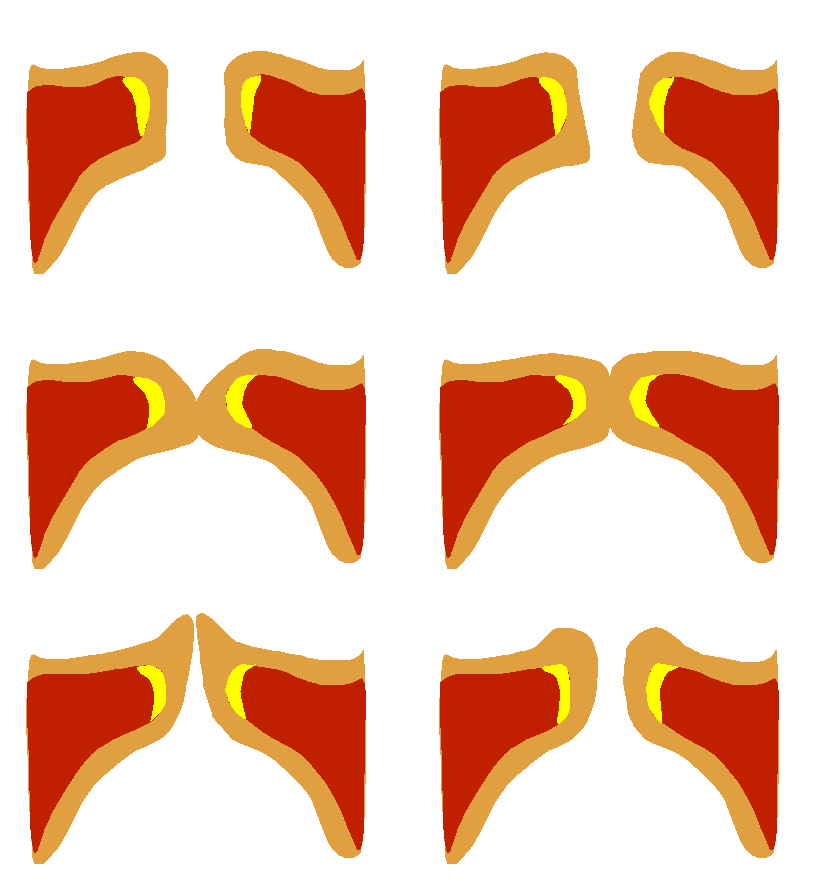
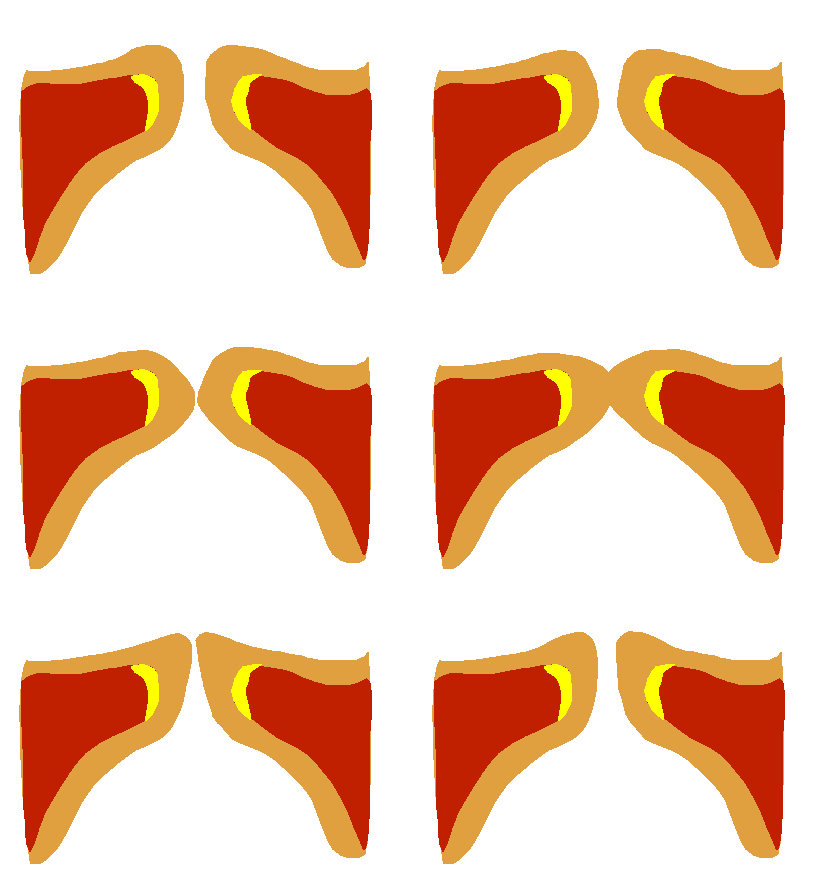
Anyhow, these pictures are hilarious and awesome.


vocal folds, chest registration


vocal folds, falsetto